Businesses rely on digital technology more than ever before. Customer information, financial transactions, emails, cloud applications, business software, remote work, video meetings, and online payments all depend on secure networks.
As businesses become more connected, cyber threats continue to evolve. Criminals constantly search for vulnerable systems to steal sensitive data, install ransomware, disrupt operations, or gain unauthorized access to business networks.
Whether you operate a small startup, local business, healthcare clinic, retail store, educational institution, manufacturing company, or enterprise organization, protecting your network is no longer optional.
One of the most important cybersecurity tools every business should have is a firewall.
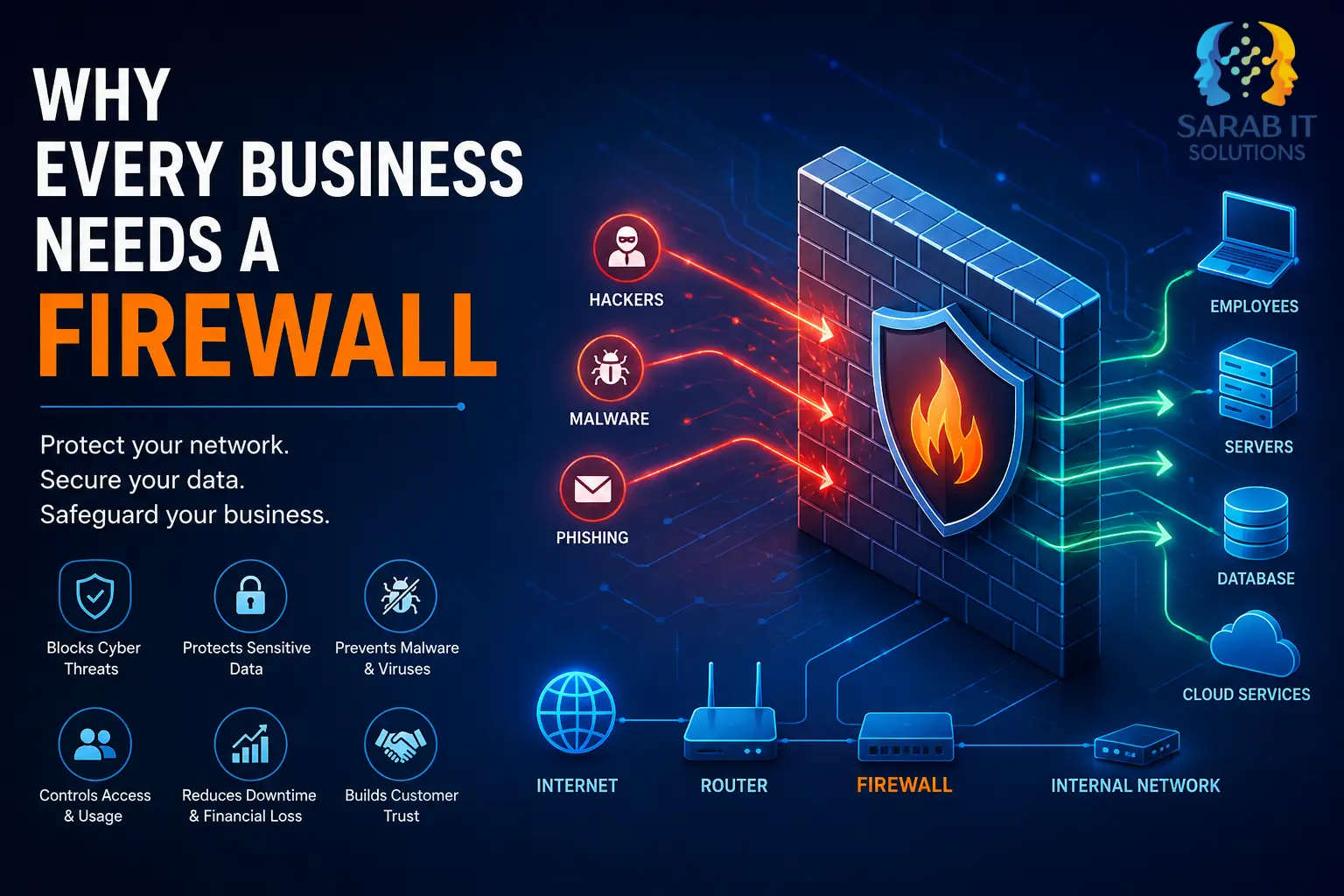
A properly configured firewall acts as the first line of defense between your internal business network and the internet. It monitors network traffic, blocks suspicious activity, and helps ensure only authorized communication reaches your systems.
This guide explains what a firewall is, how it works, why every business needs one in 2026, and how it fits into a complete cybersecurity strategy.
🔥 What Is a Firewall?
A firewall is a security system that monitors and controls network traffic entering and leaving a business network.
It acts like a security checkpoint.
Just as security personnel decide who may enter a building, a firewall evaluates network traffic and determines what should be allowed and what should be blocked according to predefined security rules.
Every time a computer communicates with the internet, information travels through network connections.
A firewall continuously analyzes this traffic to identify legitimate communication while helping block suspicious or unauthorized activity.
Modern firewalls can inspect:
- Web traffic
- Email communication
- Applications
- Network protocols
- File transfers
- Remote connections
- Cloud traffic
Instead of simply blocking everything, a firewall allows trusted communication while helping reduce unnecessary risks.
🌐 Why Businesses Need a Firewall
Every internet-connected business faces cybersecurity risks.
Cybercriminals may attempt to:
- Steal customer information
- Encrypt business files using ransomware
- Install malware
- Exploit software vulnerabilities
- Access confidential business data
- Interrupt business operations
- Take control of company devices
Even businesses with only a few employees can become targets.
Small and medium-sized businesses are increasingly attacked because attackers often assume their security measures are weaker than those of larger organizations.
A firewall significantly reduces the opportunities available to attackers by filtering unwanted network traffic before it reaches internal systems.
🛡 Protection Against Cyberattacks
Firewalls help detect and block many common attack attempts before they reach business devices.
Examples include:
- Unauthorized connection attempts
- Port scanning
- Network probing
- Known malicious IP addresses
- Suspicious traffic patterns
- Exploitation attempts
Although no firewall can stop every cyberattack, it provides an important defensive layer that reduces exposure.
Cybersecurity works best when multiple protective measures work together.
🔐 Protecting Sensitive Business Information
Businesses manage valuable information every day, including:
- Customer records
- Employee information
- Financial documents
- Payment information
- Contracts
- Business plans
- Intellectual property
- Login credentials
If unauthorized individuals gain access to this information, the consequences may include financial loss, operational disruption, legal obligations, and damage to customer confidence.
Firewalls help control how information enters and leaves business networks, reducing opportunities for unauthorized access.
🚫 Blocking Malware and Ransomware
Malware continues to be one of the most significant cybersecurity threats facing businesses.
Common examples include:
- Ransomware
- Spyware
- Trojans
- Worms
- Botnets
- Remote access malware
These threats may arrive through:
- Malicious websites
- Phishing emails
- Unsafe downloads
- Infected software
- Compromised devices
Modern firewalls can identify many suspicious connections before malicious software establishes communication with external servers.
This additional layer of protection helps reduce the likelihood of successful attacks.
💻 Supporting Remote and Hybrid Work
Modern businesses increasingly rely on remote employees.
People now work from:
- Home offices
- Customer locations
- Airports
- Hotels
- Coffee shops
- Shared workspaces
These locations often use networks that businesses do not control.
Many modern business firewalls support secure remote access using encrypted VPN connections.
This allows employees to access company resources more securely while reducing risks associated with public internet connections.
☁ Cloud Security
Business applications increasingly operate in cloud environments.
Organizations now use services such as:
- Microsoft 365
- Google Workspace
- Cloud storage
- CRM systems
- ERP platforms
- Online collaboration tools
Modern firewalls can help monitor traffic between users, cloud services, and business applications.
Cloud-aware security policies help organizations maintain better visibility over network activity.
👥 Controlling Employee Internet Access
Firewalls can also support acceptable internet usage policies.
Businesses may choose to restrict access to:
- Gambling websites
- Malicious websites
- Adult content
- Known phishing domains
- High-risk downloads
- Unauthorized applications
This helps reduce unnecessary security risks while supporting productive use of company resources.
📊 Monitoring Network Activity
Modern firewalls do much more than block traffic.
They also provide valuable insights into network activity.
Administrators can monitor:
- Connected devices
- Internet usage
- Blocked attacks
- Network traffic
- Suspicious activity
- Security events
This visibility allows businesses to identify unusual behavior before it develops into larger security incidents.
⚡ Reducing Business Downtime
Cyber incidents can interrupt normal business operations.
Examples include:
- Ransomware attacks
- Network outages
- Malware infections
- Data theft investigations
- Server compromise
Business downtime may lead to:
- Lost revenue
- Delayed customer service
- Missed deadlines
- Recovery costs
- Reputational damage
A firewall helps reduce risk by blocking many threats before they affect business systems.
🤝 Building Customer Trust
Customers increasingly expect organizations to protect their information.
Businesses demonstrating strong cybersecurity practices often inspire greater confidence.
While customers may never see the firewall itself, they benefit from the security it provides.
Protecting customer information contributes to long-term business relationships.
🏢 Types of Business Firewalls
Different organizations require different firewall solutions.
Hardware Firewall
Installed between the internet connection and the business network.
Suitable for offices with multiple devices.
Software Firewall
Installed directly on computers or servers.
Provides protection for individual devices.
Cloud Firewall
Designed for cloud-based infrastructure and distributed workforces.
Often used by organizations with hybrid environments.
Next-Generation Firewall (NGFW)
Modern NGFW solutions provide advanced capabilities such as:
- Deep packet inspection
- Application awareness
- Intrusion prevention
- Malware detection
- SSL inspection
- Threat intelligence
- User identity awareness
Many medium and large organizations now deploy NGFW technology.
⚠ A Firewall Alone Is Not Enough
A firewall is one important part of cybersecurity—but it should not be the only protection.
Businesses should also implement:
- Multi-factor authentication (MFA)
- Strong passwords
- Endpoint protection
- Regular software updates
- Data backups
- Employee security awareness training
- Email security
- Secure Wi-Fi
- Access control
- Network monitoring
Cybersecurity works best through multiple layers of protection rather than relying on one technology.
🚫 Common Firewall Mistakes
Many businesses install a firewall but still leave themselves vulnerable.
Common mistakes include:
- Using default settings
- Never updating firewall firmware
- Leaving unnecessary ports open
- Weak administrator passwords
- Poor rule management
- Ignoring security logs
- Allowing unrestricted internet access
- No regular security reviews
Proper configuration and maintenance are just as important as installing the firewall itself.
🏛 Industries That Need Firewalls
Almost every industry benefits from firewall protection, including:
- Healthcare
- Banking
- Education
- Retail
- Manufacturing
- Ecommerce
- Government
- Hospitality
- Logistics
- IT companies
- Professional services
Any business connected to the internet should consider appropriate firewall protection.
🔮 Future of Business Firewalls
Cybersecurity continues to evolve.
Modern firewalls increasingly include:
- AI-assisted threat detection
- Cloud-native protection
- Zero Trust integration
- Behavioral analytics
- Automated threat response
- Threat intelligence feeds
- Identity-based access controls
Businesses should view firewall security as an ongoing investment rather than a one-time purchase.
🏁 Final Thoughts
Cyber threats continue to become more sophisticated, but many successful attacks still target businesses with weak or outdated security practices.
A firewall helps create an important security barrier between your business network and the internet by filtering traffic, blocking unauthorized access, reducing exposure to malware, and supporting safer business operations.
While no firewall can eliminate every cyber risk, it remains one of the most valuable components of a layered cybersecurity strategy.
Whether you operate a small business or a large organization, investing in a properly configured firewall is an investment in business continuity, customer trust, and long-term resilience.
🔒 Need Professional IT & Network Security Solutions?
At Sarab IT Solutions, we help businesses strengthen their IT infrastructure with secure networking, firewall implementation, cybersecurity best practices, server management, website security, and custom technology solutions.
Whether you're setting up a new office network, improving your cybersecurity posture, or planning a complete IT infrastructure upgrade, our team can help you choose the right solution for your business.
Contact Sarab IT Solutions today to discuss your business security and IT requirements.